Avoiding the Distributed Monolith Trap in Microservices
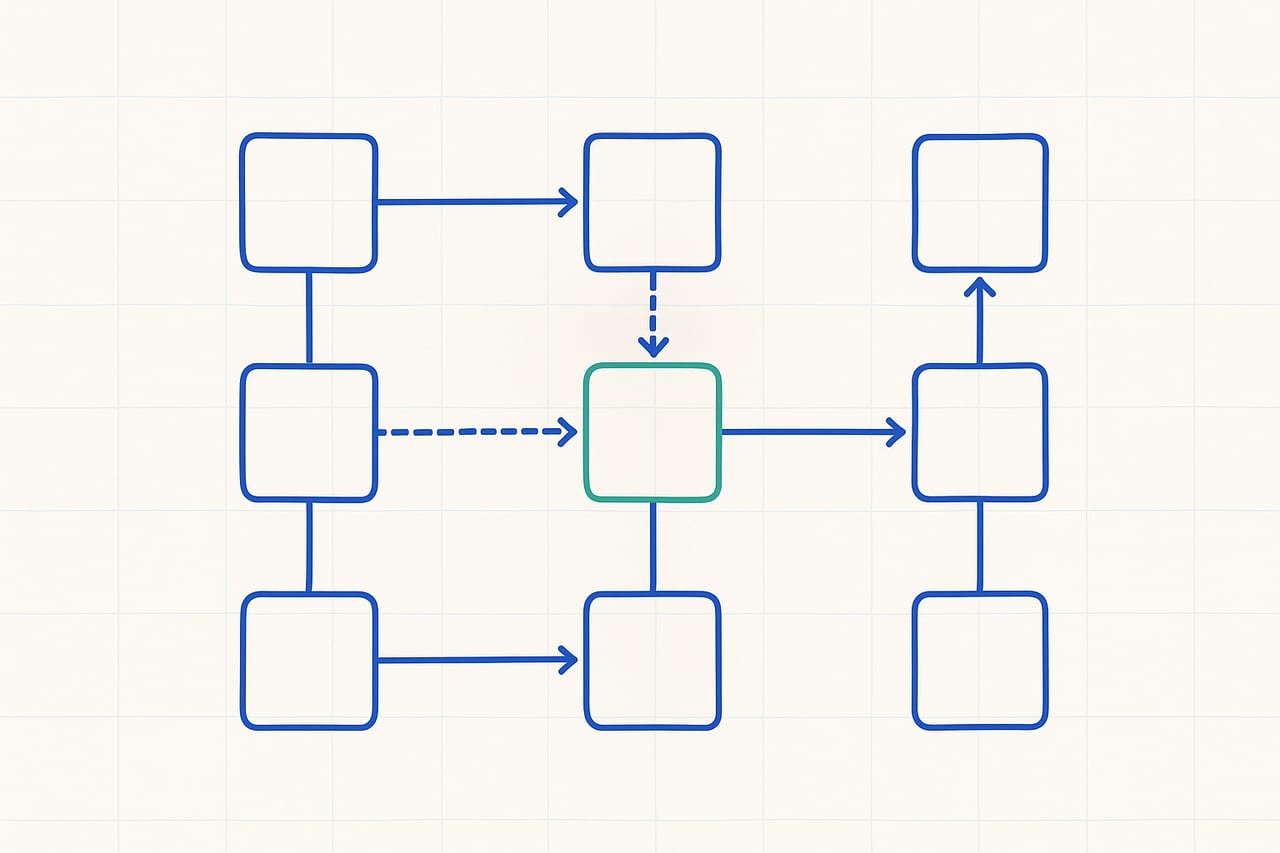
- Microservices can regress into tightly coupled systems.
- Frequent inter-service calls lead to latency and reliability issues.
- Decoupling strategies like API gateways can mitigate risks.
- Monitoring service dependencies is crucial for maintaining autonomy.
The problem
Startups adopting microservices often face the challenge of their systems becoming tightly coupled over time. This occurs when services, originally designed to be independent, start to rely heavily on each other for functionality. As a result, teams experience increased latency, reduced reliability, and a significant slowdown in deployment speed. This is particularly painful for founders who prioritize agility and rapid iteration, as the original benefits of microservices begin to erode.
What we found
A key insight is that the introduction of synchronous inter-service communication patterns, such as REST APIs or gRPC calls, often leads to unintended coupling. Teams may prioritize quick feature delivery over architectural integrity, leading to a situation where services become interdependent. This is exacerbated by a lack of visibility into service interactions, making it difficult for teams to recognize and address these dependencies before they escalate into a distributed monolith.
How to implement it
To avoid falling into the distributed monolith trap, start by establishing clear service boundaries based on business capabilities rather than technical layers. Implement an API gateway to manage inter-service communication, which can help decouple services by providing a single entry point for requests. Additionally, adopt asynchronous communication patterns, such as message queues (e.g., RabbitMQ or Kafka), to minimize direct dependencies. Regularly audit service interactions using tools like OpenTelemetry to gain visibility into dependencies and identify potential coupling issues early.
How this makes life easier
By preventing tightly coupled architectures, your team can achieve faster deployment cycles and greater reliability. This approach allows for independent scaling of services, reducing the risk of a single point of failure. Furthermore, asynchronous communication can lead to lower latency in user-facing applications, as services can process requests without waiting for responses from other services, ultimately improving user experience.
When to be cautious
While decoupling is essential, it's important to recognize the trade-offs involved. Overly complex asynchronous architectures can lead to challenges in debugging and error handling. Ensure that your team has the necessary tooling and processes in place to manage these complexities. Additionally, avoid over-engineering; not every interaction requires decoupling. Prioritize critical service interactions based on performance and reliability needs.
Figures are industry-typical ranges for these techniques, not guaranteed results — actual numbers depend on your workload.
The solution
To maintain the benefits of a microservices architecture, actively monitor and manage service dependencies, implement an API gateway, and leverage asynchronous communication patterns. This proactive strategy will help you avoid the pitfalls of tightly coupled systems and enhance your startup's agility.
FAQ
How can I identify tightly coupled services?
Use dependency mapping tools to visualize service interactions. Look for services with high inter-call rates and shared data models, as they often indicate tight coupling.
What tools can help with monitoring service dependencies?
Consider using OpenTelemetry for tracing service calls and tools like Grafana or Prometheus for monitoring performance metrics. These can provide insights into service interactions.
Is it possible to refactor a monolithic service into microservices without downtime?
Yes, employing a strangler fig pattern allows for gradual migration. You can incrementally replace parts of the monolith with microservices while keeping the system operational.
When should I use synchronous vs. asynchronous communication?
Use synchronous communication for critical, real-time interactions where immediate responses are essential. Opt for asynchronous communication for less time-sensitive tasks to enhance resilience and scalability.
Want help to design microservices that scale without a rewrite?
This is exactly what our microservices architecture work covers. Book a build audit and we'll map it against your real architecture and cost curve.
Book a Build Audit