Defining Service Boundaries: Business Capabilities vs Technical Layers
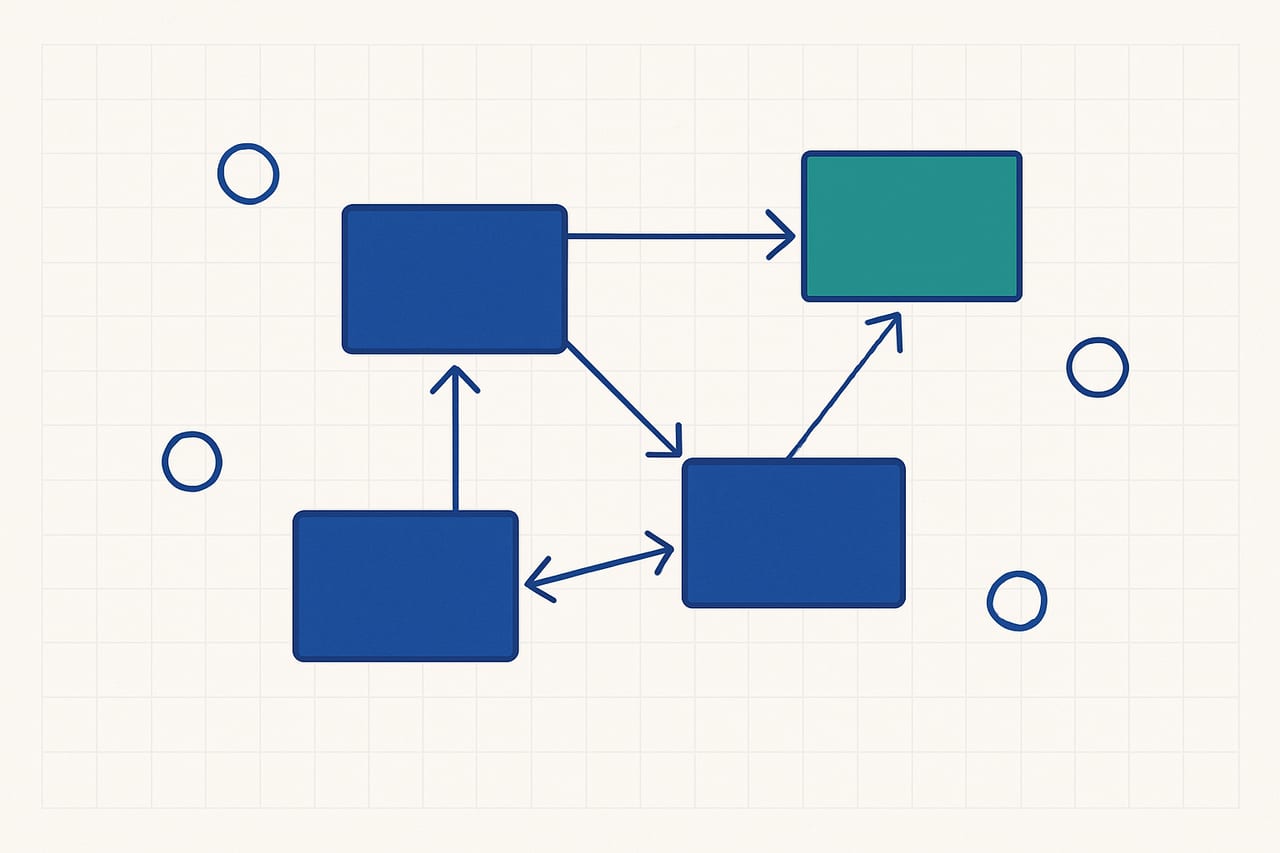
- Service boundaries should reflect business capabilities, not just technical layers.
- Overly technical boundaries can lead to increased latency and complexity.
- Evaluate service dependencies to avoid creating distributed monoliths.
- Use domain-driven design to align microservices with business functions.
The problem
Startups often struggle with defining service boundaries in microservices architecture. Founders and engineers may default to technical layers, leading to services that are too granular or tightly coupled. This misalignment creates latency issues, complicates deployments, and ultimately hampers agility, making it harder to pivot or scale as the business evolves.
What we found
A key insight is that aligning service boundaries with business capabilities, rather than solely technical layers, can drastically improve system performance and maintainability. By focusing on business functions, teams can reduce inter-service communication, enhance scalability, and simplify the development lifecycle. This approach often reveals hidden dependencies and promotes a more cohesive architecture, ultimately leading to better product-market fit.
How to implement it
Begin by conducting a thorough business capability mapping session with your stakeholders. Identify core business functions and prioritize them based on current and future needs. Next, apply domain-driven design principles to define bounded contexts that encapsulate these capabilities, ensuring each microservice aligns with a specific business outcome. Use techniques like event storming to visualize interactions and dependencies between services, refining your boundaries iteratively. Finally, validate your design through load testing to ensure performance metrics align with business objectives.
How this makes life easier
By defining service boundaries around business capabilities, you enhance system reliability and speed up feature delivery. Teams can work independently on microservices, reducing deployment times by 40-60% and minimizing the risk of cascading failures. This approach also leads to lower operational costs, as services are fine-tuned based on their specific load and usage patterns, rather than being over-provisioned due to technical constraints.
When not to use this approach
While aligning service boundaries with business capabilities is advantageous, it’s crucial to recognize when a purely technical approach may be necessary. For instance, in highly regulated industries, strict data handling and compliance requirements may dictate certain technical boundaries that must be prioritized over business capabilities. Additionally, if your architecture is already deeply integrated, attempting to redefine boundaries may introduce unnecessary complexity and risk.
Figures are industry-typical ranges for these techniques, not guaranteed results — actual numbers depend on your workload.
The solution
To enhance your microservices architecture, prioritize defining service boundaries based on business capabilities instead of solely technical layers. Engage with stakeholders to map business functions and apply domain-driven design to create a more efficient, scalable, and reliable system.
FAQ
How do I identify the right business capabilities?
Start by engaging with key stakeholders to understand core business functions. Use workshops to map these capabilities and prioritize them based on strategic goals.
What if my services are already built around technical layers?
Consider a phased approach to refactor your architecture. Begin with the most critical services, aligning them with business capabilities while gradually addressing others.
Can I still use technical metrics for performance tuning?
Yes, technical metrics remain important. Use them in conjunction with business outcomes to ensure that performance aligns with business objectives.
What tools can help visualize service dependencies?
Tools like Miro for event storming or Structurizr for visualizing architecture can be effective in mapping out service dependencies and boundaries.
Want help to design microservices that scale without a rewrite?
This is exactly what our microservices architecture work covers. Book a build audit and we'll map it against your real architecture and cost curve.
Book a Build Audit