Event-Driven vs Request/Response: Optimizing Microservice Boundaries
- Select event-driven architecture for high-throughput scenarios.
- Request/response is preferable for low-latency, synchronous needs.
- Hybrid models can mitigate risks and enhance flexibility.
- Boundary decisions should align with business priorities and technical constraints.
The problem
Startups often struggle with choosing the right communication pattern between microservices, leading to performance bottlenecks and increased costs. The typical dilemma arises when deciding between event-driven architectures, which can introduce latency and complexity, and request/response patterns that might not scale well under heavy loads. This confusion can result in delays in product delivery and inflated operational costs, especially during peak traffic periods.
What we found
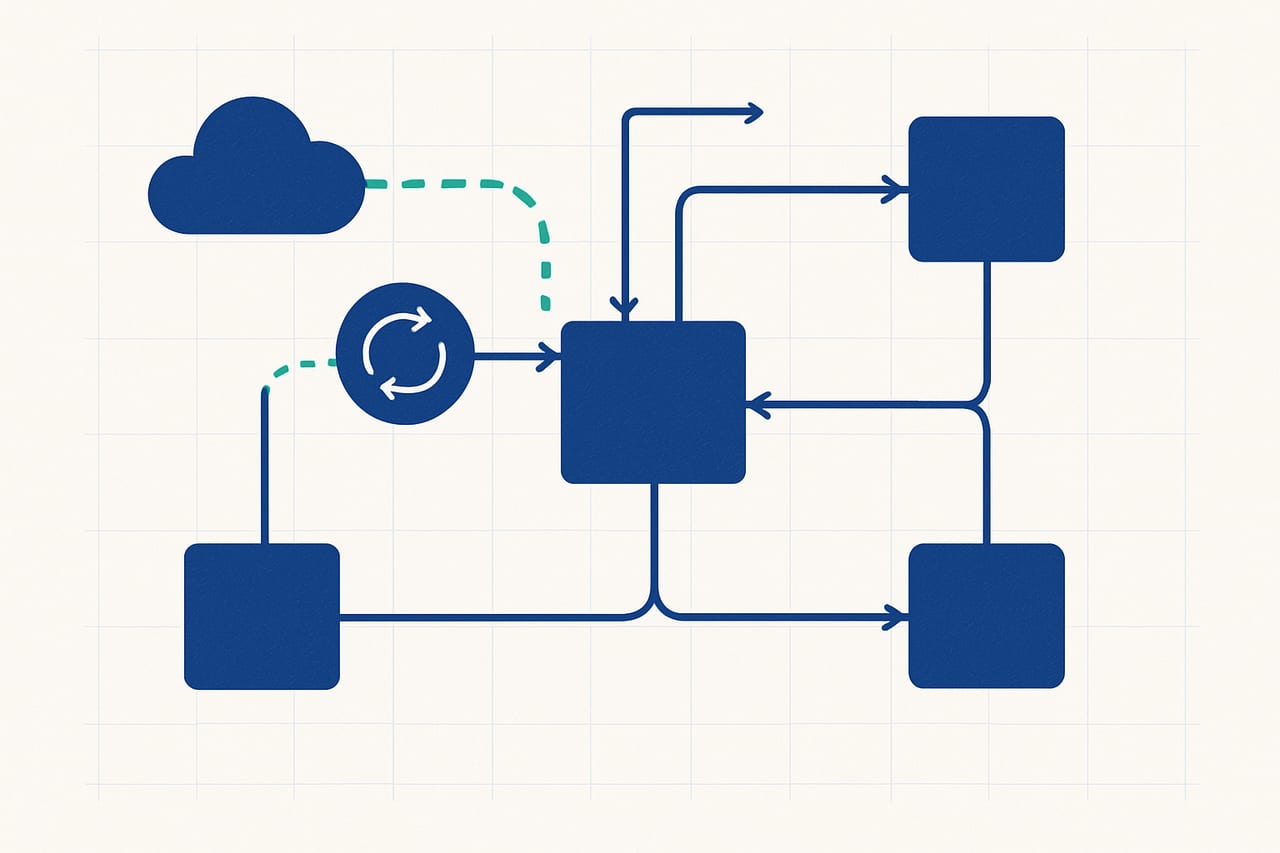
A non-obvious insight is that many startups overlook the hybrid approach, which allows them to leverage the strengths of both architectures. For instance, using request/response for critical, synchronous operations while employing event-driven mechanisms for less critical, asynchronous tasks can yield a more resilient and responsive system. This dual approach can also facilitate better resource allocation, potentially reducing costs by up to 30% during peak usage.
How to implement it
Begin by mapping out your service interactions and identifying the critical paths that require immediate responses versus those that can tolerate some latency. For high-throughput services, implement an event-driven architecture using technologies like Apache Kafka or AWS EventBridge to decouple services and enhance scalability. For synchronous calls, utilize REST or gRPC, ensuring that you implement retries and circuit breakers to handle failures gracefully. Consider a hybrid model where you can publish events for non-critical updates while maintaining request/response for essential user interactions.
How this makes life easier
By adopting a hybrid approach, startups can achieve significant improvements in both cost-efficiency and performance. Event-driven systems can handle bursts of traffic more gracefully, reducing the risk of service outages during high-demand periods. This architecture can lead to a 50-90% reduction in latency for non-critical operations while maintaining a responsive user experience for critical requests. The overall result is a more reliable service that can scale seamlessly with user growth.
When not to use event-driven architecture
While event-driven architectures offer many benefits, they are not without their pitfalls. Avoid using them for operations that require immediate consistency, as the eventual consistency model can lead to complexity and user experience issues. Additionally, if your team lacks experience with distributed systems, the overhead of managing event streams and ensuring message delivery can introduce more problems than it solves.
Figures are industry-typical ranges for these techniques, not guaranteed results — actual numbers depend on your workload.
The solution
Adopt a hybrid communication model that leverages both event-driven and request/response architectures based on the criticality of your service interactions. This will optimize performance, reduce costs, and enhance reliability as your startup scales.
FAQ
How do I know when to switch from request/response to event-driven?
Monitor your service load and latency. If you find that certain operations are causing delays during peak traffic, consider refactoring those to an event-driven model to improve responsiveness.
What tools should I use for event-driven architecture?
Popular tools include Apache Kafka for messaging, AWS EventBridge for event routing, and RabbitMQ for lightweight messaging. Choose based on your team's familiarity and project requirements.
Can I combine both architectures within the same microservice?
Yes, many services can benefit from a hybrid approach, using event-driven patterns for background processing while maintaining request/response for user-facing APIs.
What are the common pitfalls of event-driven architectures?
Common pitfalls include increased complexity, eventual consistency issues, and potential challenges in debugging and monitoring. Ensure your team is prepared to handle these before fully committing.
Want help to design microservices that scale without a rewrite?
This is exactly what our microservices architecture work covers. Book a build audit and we'll map it against your real architecture and cost curve.
Book a Build Audit