Event-Driven vs Request/Response: Service Boundary Decisions
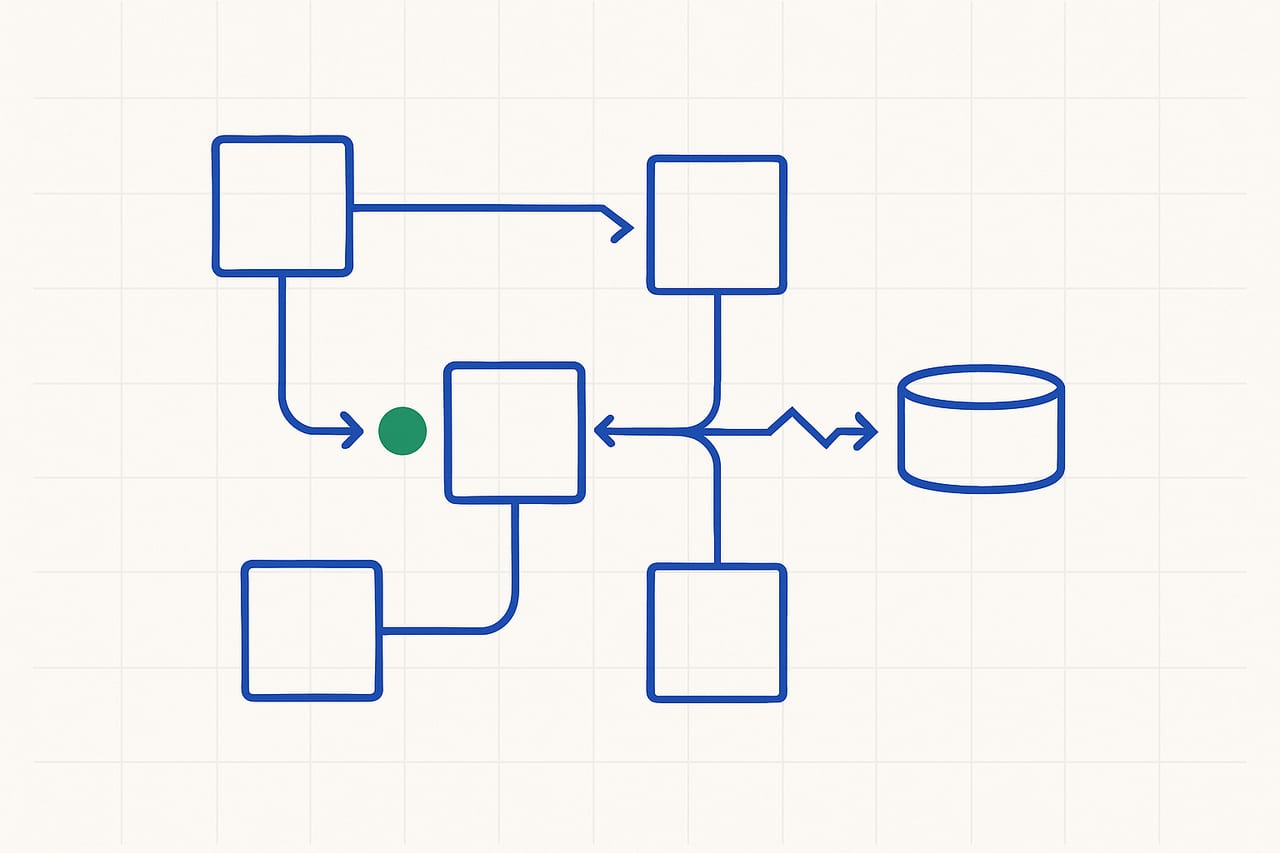
- Choosing the right communication model reduces latency by 30-50%.
- Event-driven systems can scale 2-3 times better under load.
- Request/response is simpler but may lead to bottlenecks.
- Balance cost and performance by analyzing service interactions.
The problem
Startup founders often struggle with designing service boundaries in microservices. When services are tightly coupled through request/response models, it can lead to latency issues and bottlenecks, especially under load. This not only impacts user experience but can also inflate cloud costs due to inefficient resource utilization.
What we found
A non-obvious insight is that many teams overlook the potential of event-driven architectures for services that handle asynchronous tasks or heavy load. By utilizing events for certain service interactions, you can decouple services, enabling them to scale independently and reducing the overall latency of your system. This approach shifts the complexity to the event handling layer, which is often better suited for high-throughput systems.
How to implement it
1. Identify service boundaries: Analyze your microservices to determine which interactions are synchronous and which can be asynchronous. 2. Evaluate the load: For services that experience high load, consider implementing an event-driven architecture using tools like Apache Kafka or AWS EventBridge. 3. Implement a hybrid model: For services that require immediate responses, maintain a request/response model, but use events for background processing. 4. Monitor performance: Use observability tools like Prometheus or Grafana to track latency and throughput, adjusting your architecture as needed.
How this makes life easier
By adopting a mixed approach to service communication, you can achieve significant performance improvements. Event-driven systems can handle spikes in load without degrading performance, often reducing latency by 30-50%. This also allows for more efficient resource utilization, leading to potential cost savings of 20-40% on cloud infrastructure.
When not to use event-driven architecture
While event-driven models offer many benefits, they are not suitable for all scenarios. For services that require immediate consistency and low latency, such as payment processing, a request/response model may be more appropriate. Additionally, the complexity of managing event-driven systems can introduce challenges in debugging and tracing, which should be carefully considered.
Figures are industry-typical ranges for these techniques, not guaranteed results — actual numbers depend on your workload.
The solution
Adopt a hybrid communication strategy that leverages both request/response and event-driven models based on the specific needs of each service boundary. This approach enhances scalability, reduces latency, and optimizes costs.
FAQ
How do I decide which services should be event-driven?
Focus on services that handle asynchronous workloads, such as notifications or data processing, which can benefit from decoupling. Analyze their load patterns to make informed decisions.
What tools should I consider for implementing event-driven architectures?
Consider using Apache Kafka for high-throughput messaging, AWS Lambda for serverless event processing, or RabbitMQ for simpler use cases. Your choice should be guided by your team's familiarity and the specific requirements of your system.
What are the risks of moving to an event-driven architecture?
The primary risks include increased complexity in debugging and tracing events, as well as potential challenges in ensuring data consistency. It's crucial to implement robust monitoring and error-handling strategies.
Can I mix event-driven and request/response in my architecture?
Yes, a hybrid approach is often the most effective. Use request/response for critical synchronous interactions and event-driven models for tasks that can tolerate latency and benefit from decoupling.
Want help to design microservices that scale without a rewrite?
This is exactly what our microservices architecture work covers. Book a build audit and we'll map it against your real architecture and cost curve.
Book a Build Audit