Optimizing AI Costs: Leveraging Batch APIs for Non-Urgent Tasks
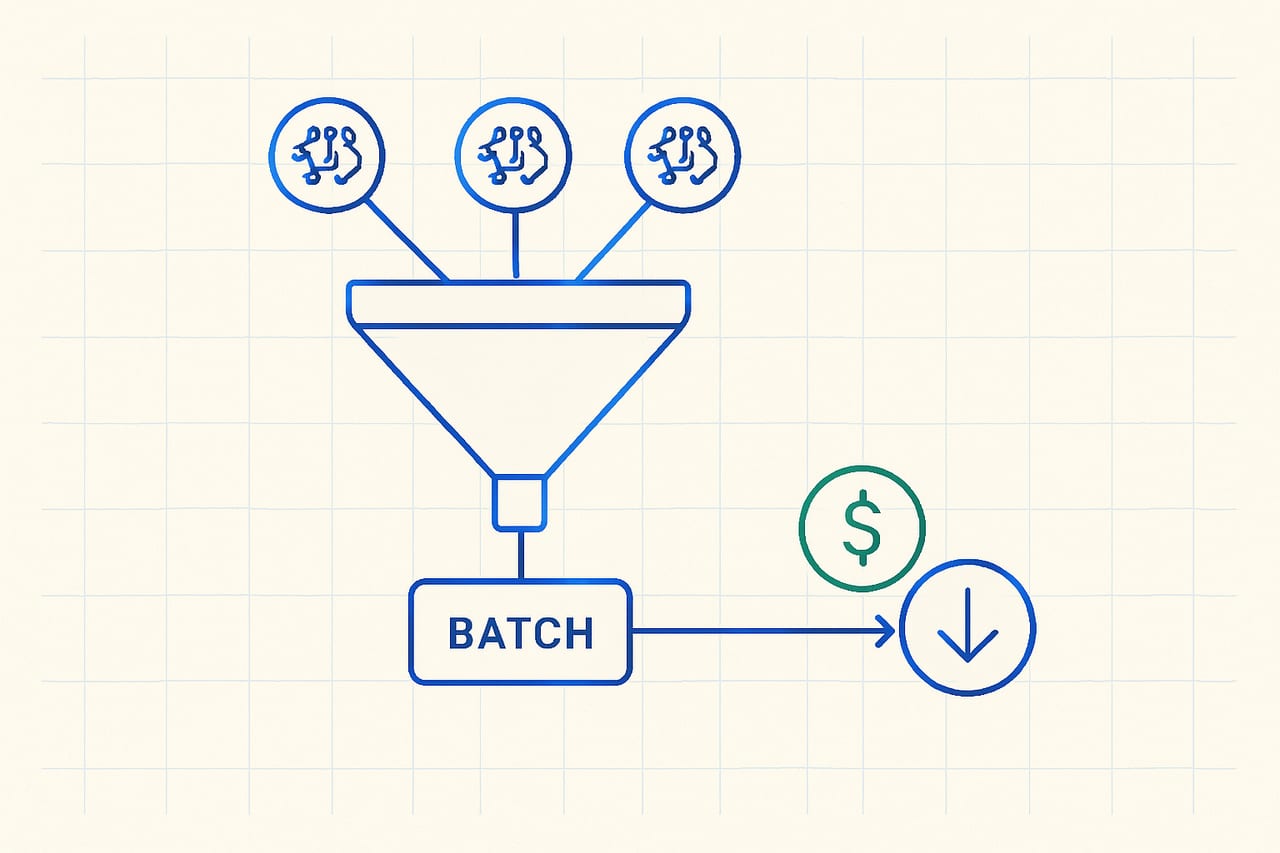
- Batch APIs can halve costs for non-urgent AI tasks.
- Routing strategies enhance system efficiency without UX compromise.
- Implementing a Batch API requires careful task evaluation.
- Long-term savings can be achieved with strategic cost management.
The problem
Startups leveraging AI often face escalating operational costs, especially when processing non-urgent requests in real-time. This is particularly true for applications like customer service chatbots or content generation tools, where immediate responses are not critical. As these AI tasks accumulate, they can lead to significant cloud spending, especially under high loads, resulting in budget overruns and reduced margins.
What we found
By strategically routing non-urgent AI tasks to a Batch API, startups can achieve cost reductions of approximately 50%. This approach reframes the problem by highlighting that not all AI workloads necessitate instant processing. Instead, batching these requests allows for more efficient resource allocation and decreased cloud spend, all while maintaining a satisfactory user experience through timely but non-immediate responses.
How to implement it
Begin by identifying non-urgent AI tasks in your workflow, such as analytics, report generation, or bulk message processing. Next, implement a Batch API that aggregates these requests, allowing for scheduled processing during off-peak hours. Use a queueing service like RabbitMQ or AWS SQS to manage incoming requests and handle retries. Ensure that your API handles both immediate and batch requests seamlessly, employing a service mesh like Istio for traffic management. Finally, monitor the performance metrics closely to optimize batch sizes and processing frequency.
How this makes life easier
Routing non-urgent AI tasks to a Batch API not only cuts costs by roughly 50% but also improves system reliability by reducing the load on real-time services. This leads to lower latency for urgent tasks, allowing teams to allocate resources more effectively. By implementing this strategy, startups can maintain a robust user experience without the stress of escalating cloud costs.
When not to use Batch APIs
While Batch APIs can significantly reduce costs, they are not suitable for all scenarios. For example, tasks requiring real-time processing, such as live chat interactions or instant feedback systems, should remain on a real-time API to ensure user satisfaction. Additionally, consider the complexity introduced by managing two different API workflows, as this could lead to increased maintenance overhead.
Figures are industry-typical ranges for these techniques, not guaranteed results — actual numbers depend on your workload.
The solution
Start routing your non-urgent AI workloads to a Batch API to capitalize on significant cost savings and improve overall system performance. Reassess your task prioritization strategy to maximize the benefits of this approach.
FAQ
What types of tasks can be routed to a Batch API?
Non-urgent tasks such as analytics, report generation, and bulk processing are ideal candidates for a Batch API.
How does this impact user experience?
By handling non-urgent tasks in batches, you can reduce costs while still ensuring that urgent requests are processed quickly, thus maintaining a positive user experience.
What tools are recommended for implementing a Batch API?
Consider using RabbitMQ or AWS SQS for queue management, and Istio for traffic management to streamline the integration.
Want help to cut AI & LLM costs without cutting quality?
This is exactly what our AI & LLM cost engineering work covers. Book a build audit and we'll map it against your real architecture and cost curve.
Book a Build Audit