Per-Service Data Ownership: The Key to Microservices Success
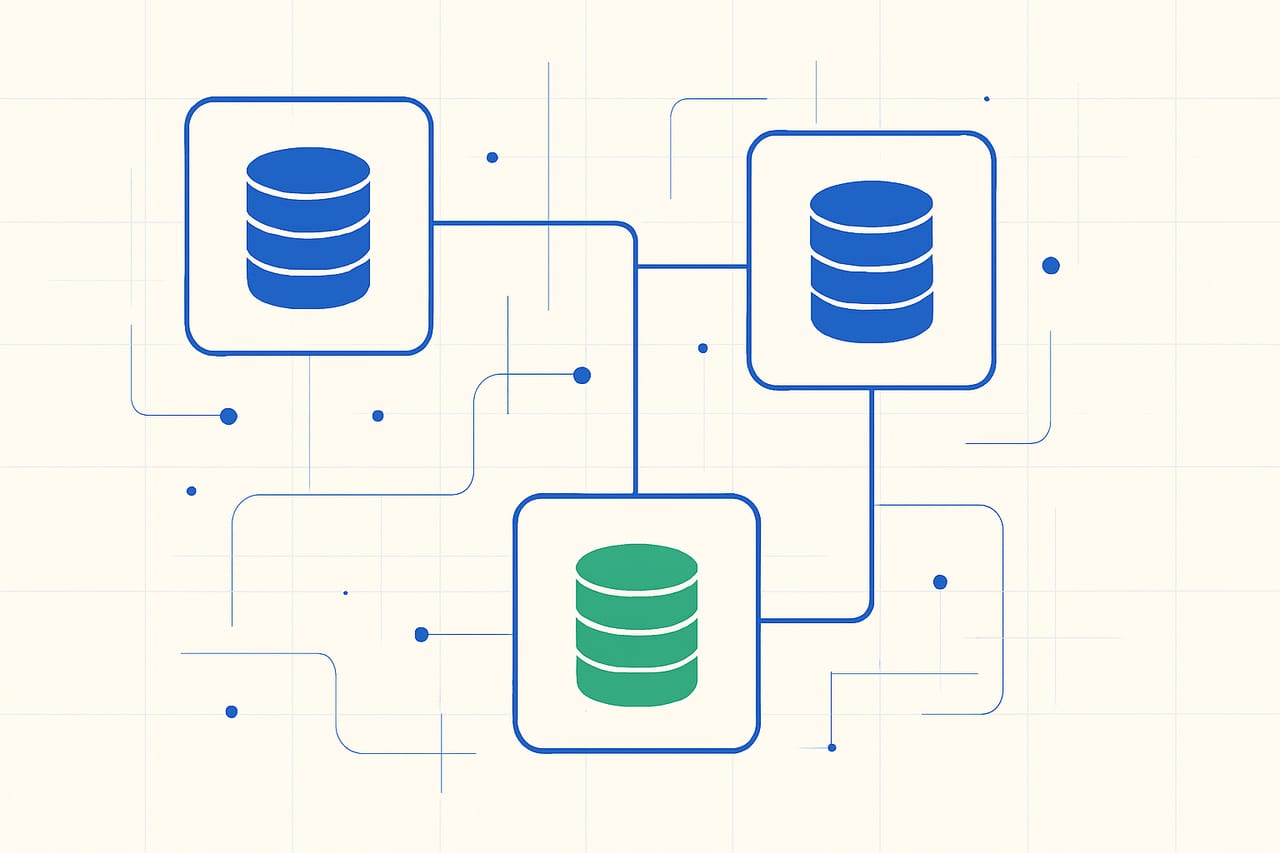
- Shared databases can lead to performance bottlenecks.
- Per-service data ownership enhances scalability and autonomy.
- Microservices thrive on independent data management.
- Transitioning to dedicated databases can reduce latency by 30-60%.
The problem
Startups often adopt microservices to enhance scalability and agility. However, a prevalent mistake is using a shared database across services. This practice leads to tightly coupled architectures where changes in one service can inadvertently affect others, creating performance bottlenecks and complicating deployments. Founders and engineers may find themselves facing increased latency and downtime, which undermines the core benefits of microservices.
What we found
The non-obvious insight is that per-service data ownership not only isolates data but also aligns it closely with business capabilities. This approach allows teams to optimize their databases for specific workloads, leading to performance improvements. For instance, services that require high write throughput can utilize a document database like MongoDB, while those needing complex querying capabilities might leverage PostgreSQL. This decoupling fosters greater innovation and reduces cross-team dependencies, ultimately enabling teams to iterate faster.
How to implement it
Begin by assessing the data needs of each microservice. Identify which services can benefit from dedicated databases based on their functionality and data access patterns. For example, a user authentication service might require a relational database for transactional integrity, while a recommendation engine could leverage a NoSQL store for high-speed data retrieval. Next, migrate existing shared database entities to their respective services using a phased approach, ensuring data consistency during the transition. Employ API gateways to manage inter-service communication and data access, minimizing the direct dependencies between services.
How this makes life easier
Implementing per-service data ownership simplifies the development process, as teams can work independently without waiting on database changes from other services. This autonomy translates to reduced deployment times—potentially cutting them by up to 50%. Furthermore, separating databases allows for tailored performance optimizations, leading to latency reductions of 30-60%, which enhances user experience and service reliability.
When not to adopt per-service data ownership
While per-service data ownership offers numerous benefits, it may not be suitable for all scenarios. For instance, if your services are in the early stages and require rapid iteration, a shared database might streamline development. However, be aware that this can lead to technical debt as your architecture evolves. It's crucial to evaluate whether the short-term convenience outweighs the long-term scalability issues.
Figures are industry-typical ranges for these techniques, not guaranteed results — actual numbers depend on your workload.
The solution
To enhance your microservices architecture, transition to a model of per-service data ownership. This will not only reduce dependencies but also improve performance and scalability, enabling your startup to innovate rapidly and efficiently.
FAQ
How do I start migrating to per-service data ownership?
Begin with a thorough analysis of your current data architecture. Identify services that can benefit from dedicated databases and create a migration plan that includes data consistency measures.
What are the risks of moving away from a shared database?
The primary risk involves potential data inconsistency during the transition phase. Implementing robust data migration strategies and maintaining clear APIs can mitigate this risk.
Can I still use shared databases in some scenarios?
Yes, in early-stage or rapidly changing environments, shared databases can simplify development. However, plan for future migration to dedicated databases as your architecture matures.
How does this affect my cloud costs?
While having multiple databases might increase initial costs, the improved performance and reduced latency can lead to lower operational costs and a better user experience, ultimately enhancing revenue.
Want help to design microservices that scale without a rewrite?
This is exactly what our microservices architecture work covers. Book a build audit and we'll map it against your real architecture and cost curve.
Book a Build Audit