Scaling Thresholds: Predicting Breakpoints at 10x and 100x Growth
- Identify your service's critical scaling thresholds early.
- Use chaos engineering to uncover hidden breakpoints.
- Implement automated load testing tailored for your growth projections.
- Prioritize observability to monitor scaling limits in real-time.
The problem
Startups often face unexpected failures when scaling their services rapidly, particularly at 10x or 100x user growth. These breakpoints can lead to significant downtime, degraded performance, and loss of customer trust. Founders and engineers frequently underestimate the non-linear nature of system performance as load increases, resulting in costly firefighting during critical scaling phases.
What we found
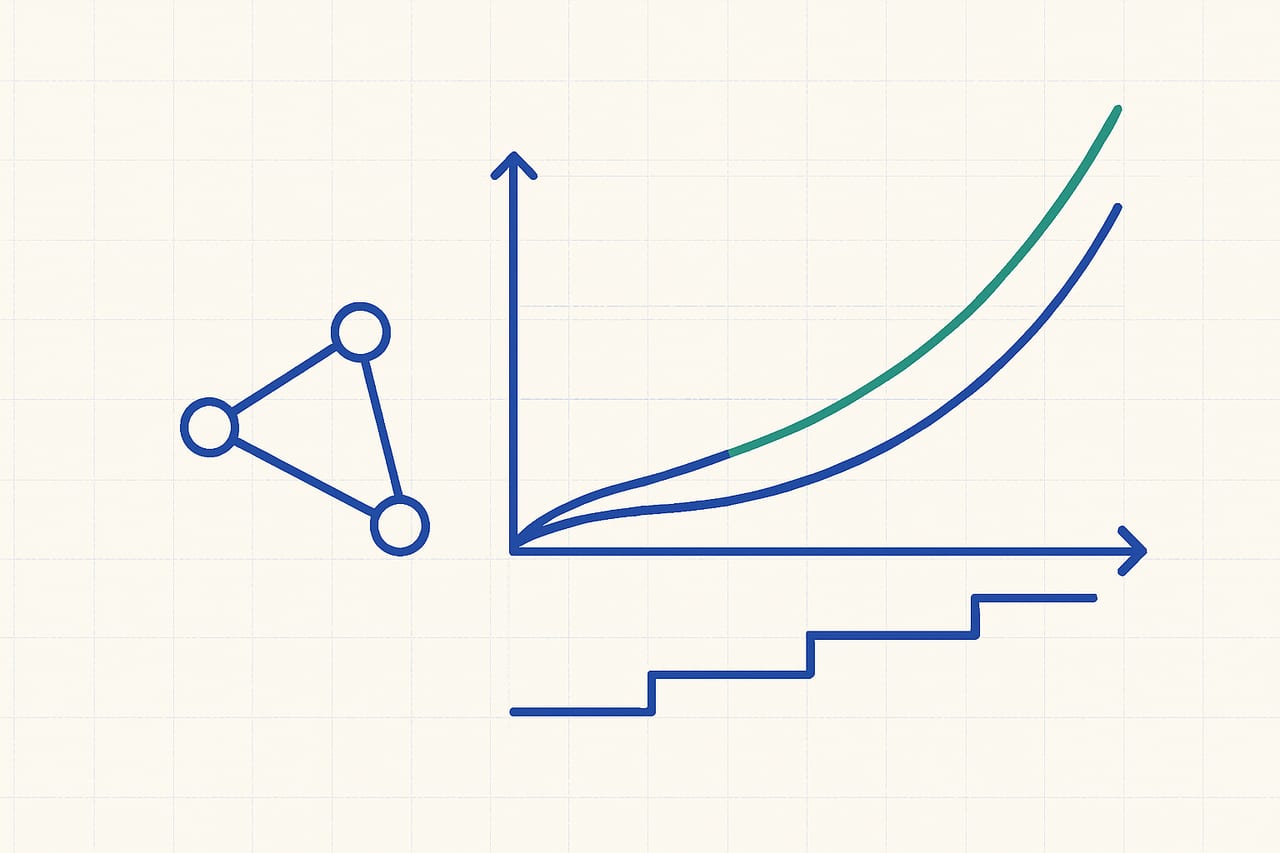
A non-obvious insight is that many systems exhibit behavioral changes well before they reach their maximum capacity. For instance, a service may handle 1,000 requests per second smoothly, but at 10,000 requests, latency can spike unexpectedly due to resource contention or inefficient database queries. By modeling these thresholds using chaos engineering principles, teams can proactively identify and address potential issues before they impact users.
How to implement it
Begin by establishing a baseline performance profile for your service under normal conditions. Use load testing tools like JMeter or Gatling to simulate user growth. Gradually increase the load, observing how system metrics such as CPU usage, memory consumption, and response times behave. Implement chaos engineering practices, such as Netflix's Chaos Monkey, to intentionally induce failures and analyze system resilience at different load levels. Document these breakpoints and refine your microservices architecture as needed to accommodate growth, optimizing for both horizontal and vertical scaling strategies.
How this makes life easier
By proactively modeling scaling thresholds, teams can significantly reduce the risk of service outages and performance degradation. This approach leads to more predictable costs associated with cloud resources, as scaling decisions are based on empirical data rather than guesswork. Additionally, it enhances overall system reliability, allowing teams to focus on innovation rather than firefighting, ultimately improving customer satisfaction and retention.
When not to rely solely on automated testing
While automated load testing and chaos engineering are invaluable, they should not replace manual testing and real-world feedback. There are scenarios, such as unique user behaviors or unusual data patterns, that automated tests may not capture. Additionally, over-reliance on these tools can lead to complacency, so it's essential to complement them with ongoing manual testing and user feedback loops.
Figures are industry-typical ranges for these techniques, not guaranteed results — actual numbers depend on your workload.
The solution
To effectively model your scaling thresholds, implement a structured approach combining load testing and chaos engineering, ensuring you can predict and mitigate performance bottlenecks before they impact your users.
FAQ
What tools should I use for load testing?
Consider using JMeter or Locust for open-source options, or BlazeMeter for a more comprehensive cloud-based solution.
How often should I conduct scaling tests?
Perform scaling tests at key milestones, such as before major product launches or after significant architectural changes.
What metrics should I focus on during scaling tests?
Monitor CPU usage, memory consumption, response times, and error rates to get a comprehensive view of system behavior under load.
How can I ensure my team is prepared for scaling?
Regularly review scaling strategies, conduct training on chaos engineering practices, and maintain an updated documentation of scaling thresholds.
Want help to map what breaks next before it does?
This is exactly what our scale roadmapping work covers. Book a build audit and we'll map it against your real architecture and cost curve.
Book a Build Audit