Service Boundaries: Balancing Business and Technical Layers
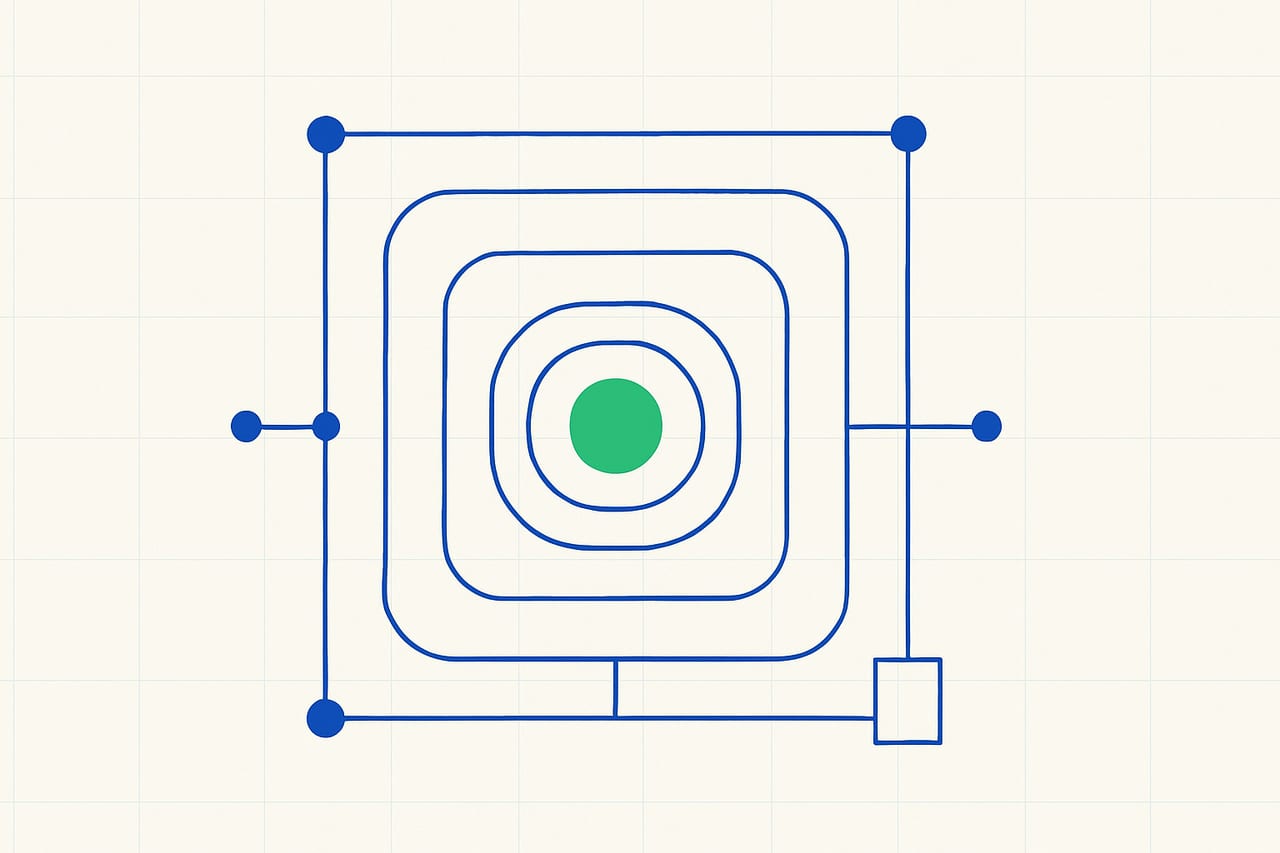
- Define service boundaries based on business capabilities for clarity.
- Align technical layers with business functions to reduce complexity.
- Use domain-driven design to facilitate better service delineation.
- Monitor service interactions to refine boundaries over time.
The problem
Startups often struggle with defining service boundaries, leading to monolithic architectures that hinder scalability and agility. Founders and engineers frequently face this issue during the initial phases of product development, where rapid iteration is crucial. The pain points arise when teams cannot quickly pivot or scale due to tightly coupled services that do not align with evolving business needs.
What we found
A non-obvious insight is that service boundaries should prioritize business capabilities over technical layers. By focusing on what the business needs to achieve rather than how the system is architected, teams can create services that are more aligned with user requirements. This approach mitigates the risk of over-engineering and allows for more flexible adaptations as the business landscape changes.
How to implement it
Begin by conducting a thorough analysis of your business capabilities. Use techniques such as event storming or user story mapping to identify key functionalities. Once you have a clear understanding, map these capabilities to potential microservices. For instance, if your application includes user management, payment processing, and content delivery, each of these can be a separate service. Next, apply domain-driven design principles to define bounded contexts, ensuring that each service encapsulates its own data and logic. Finally, implement API contracts and use tools like Swagger for documentation to facilitate communication between services.
How this makes life easier
By aligning service boundaries with business capabilities, teams can achieve improved agility and faster time-to-market. This approach not only streamlines development but also enhances maintainability, as services are easier to understand and modify. Additionally, aligning services with business needs can lead to cost savings; for example, organizations often report a 30-50% reduction in development time when using clear service boundaries that reflect business functions.
Trade-offs and when not to
While focusing on business capabilities is beneficial, it’s essential to recognize potential trade-offs. For example, overly granular services may lead to increased inter-service communication overhead, which can negatively impact performance. A startup should avoid excessive fragmentation when the business model is still evolving or when resources are limited, as this can complicate deployment and operational overhead.
Figures are industry-typical ranges for these techniques, not guaranteed results — actual numbers depend on your workload.
The solution
To effectively define service boundaries, prioritize business capabilities over technical layers. Start by mapping out your business functionalities and align them with microservices, applying domain-driven design principles to ensure clarity and maintainability.
FAQ
How do I know if my service boundaries are too granular?
Monitor service performance and inter-service communication. If you notice high latency or increased complexity in deployment, it may indicate that your services are overly granular.
What tools can help in defining service boundaries?
Tools like Miro for collaborative mapping, EventStorming for visualizing workflows, and Swagger for API documentation can be instrumental in defining and refining service boundaries.
Is there a risk of over-engineering when defining boundaries?
Yes, focusing too much on technical layers can lead to over-engineering. Ensure that your service design is driven by actual business needs rather than technical ideals.
How often should I revisit service boundaries?
Revisit your service boundaries quarterly or after significant product changes to ensure they still align with business objectives and user needs.
Want help to design microservices that scale without a rewrite?
This is exactly what our microservices architecture work covers. Book a build audit and we'll map it against your real architecture and cost curve.
Book a Build Audit