Strangler-Fig Migration: Extracting Microservices Without Outages
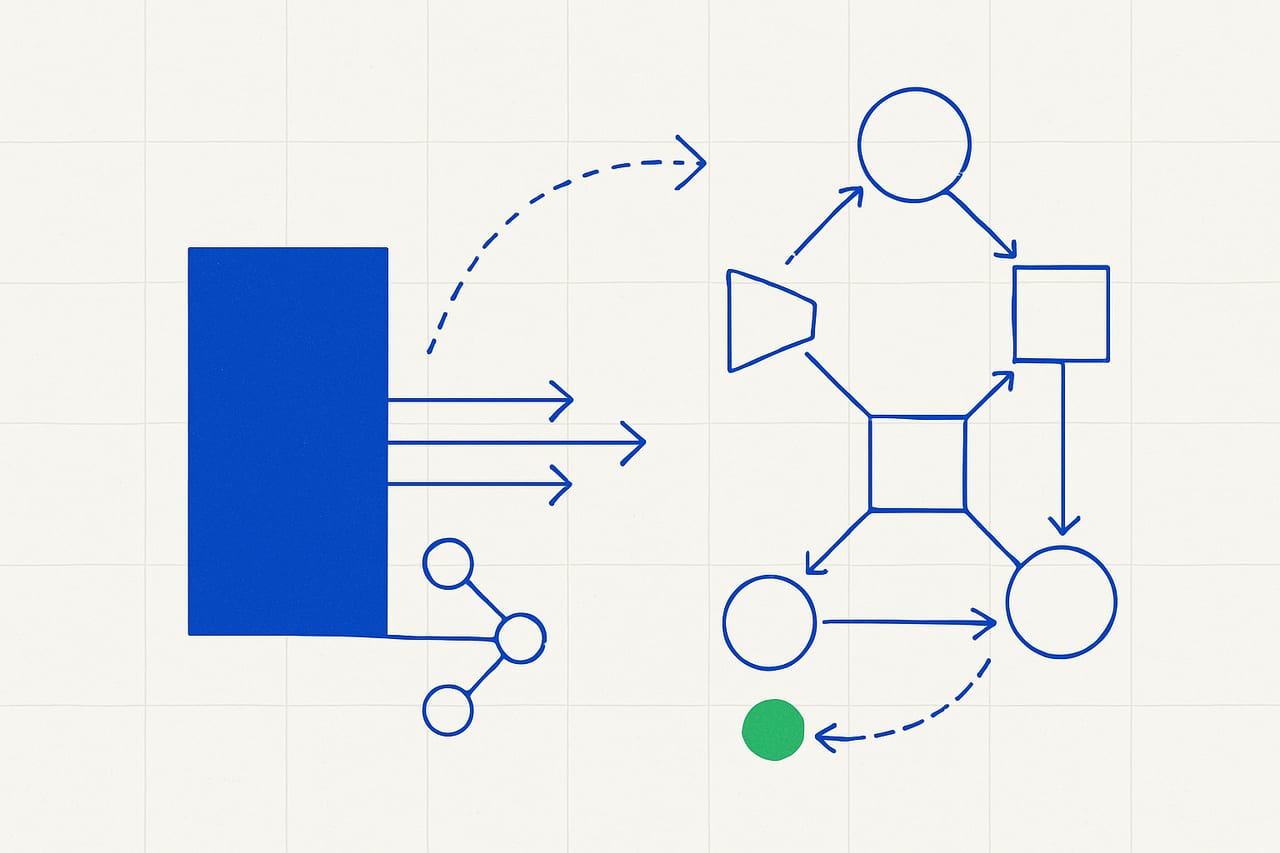
- Microservices can be extracted from monoliths without downtime.
- Use feature flags for gradual traffic redirection to new services.
- Maintain dual writes during migration to ensure data consistency.
- Plan for rollback strategies to minimize risk during extraction.
The problem
Startups often face the challenge of scaling their applications as they grow. Monolithic architectures can become bottlenecks, leading to slow deployments and difficulty in implementing new features. The fear of outages during migration prevents many teams from adopting microservices, causing stagnation in their development processes. This issue is particularly acute for early-stage startups that rely on agility and rapid iteration to stay competitive.
What we found
The key insight for successful strangler-fig migration is the use of feature flags combined with dual writes. This allows teams to gradually shift traffic from the monolith to the new microservice while maintaining system stability. By controlling the flow of requests and ensuring that data remains consistent across both systems, startups can mitigate the risks associated with service extraction. This approach not only minimizes downtime but also enables real-time monitoring and adjustments during the migration.
How to implement it
Start by identifying a bounded context within your monolith that can be isolated as a microservice. Next, implement feature flags to control the routing of user requests. Begin by routing a small percentage of traffic to the new microservice while monitoring its performance. Utilize dual writes to ensure that both the monolith and the new service are updated simultaneously, which maintains data integrity. Gradually increase the traffic to the microservice as confidence in its stability grows, and be prepared to roll back if issues arise.
How this makes life easier
By adopting the strangler-fig pattern, startups can decouple their services incrementally, allowing for faster development and deployment cycles. This approach reduces the risk of outages during migration, enabling teams to iterate more quickly. Additionally, it sets up a more scalable architecture that can handle increased load and complexity without significant rework, ultimately leading to improved reliability and performance.
Trade-offs and Considerations
One trade-off when using dual writes is the added complexity in maintaining data consistency. This approach requires careful management of data flows and potential conflicts between the monolith and the microservice. Additionally, feature flags must be managed diligently to avoid technical debt and ensure that legacy code does not linger longer than necessary. Startups should weigh the benefits of gradual migration against the overhead introduced by these mechanisms.
Figures are industry-typical ranges for these techniques, not guaranteed results — actual numbers depend on your workload.
The solution
To successfully implement strangler-fig migration, start by isolating a bounded context within your monolith and use feature flags and dual writes to facilitate a gradual transition. This approach minimizes risk and allows for real-time adjustments, ensuring a smooth extraction of your first microservice.
FAQ
How can I ensure data consistency during migration?
Implement dual writes to keep both the monolith and new microservice in sync. Monitor for discrepancies and have rollback strategies ready.
What tools can help manage feature flags?
Consider using tools like LaunchDarkly or Optimizely, which provide robust feature flag management and analytics.
Is it necessary to migrate all at once?
No, the strangler-fig pattern encourages gradual migration, allowing for controlled testing and adjustments.
How do I know when to fully switch to the microservice?
Monitor performance metrics and error rates; once the new service consistently meets your SLAs, you can fully transition.
Want help to design microservices that scale without a rewrite?
This is exactly what our microservices architecture work covers. Book a build audit and we'll map it against your real architecture and cost curve.
Book a Build Audit