Summarizing Conversation History to Cut Context Costs
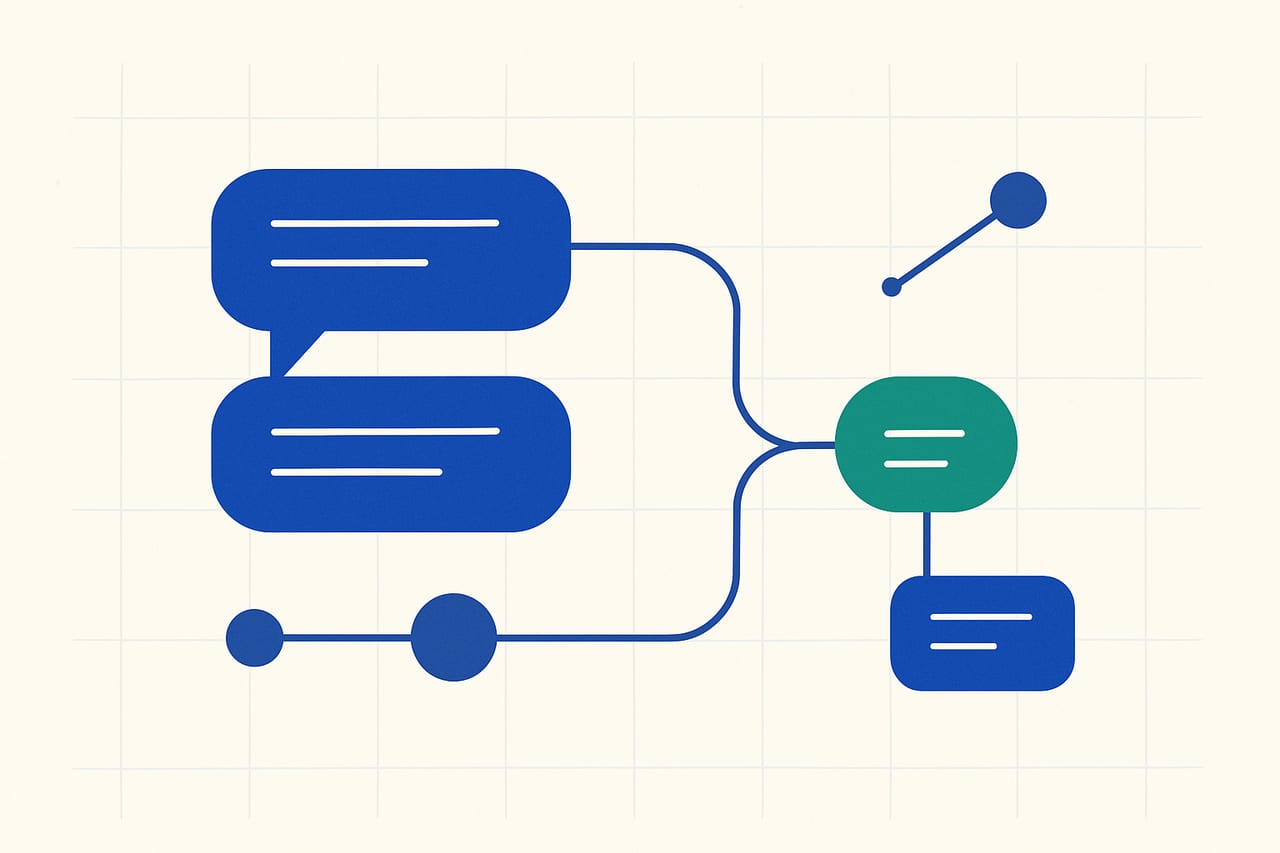
- Reduce context window costs by summarizing instead of replaying history.
- Implement hierarchical summarization to maintain context integrity.
- Experience up to 70% cost reduction with effective summaries.
- Enhance response times while minimizing token usage.
The problem
Startups leveraging LLMs for conversational AI often face escalating costs due to the large context windows required for maintaining conversation history. As conversations grow longer, the number of tokens processed increases, leading to higher expenses. For instance, with GPT-4, every 1,000 tokens could cost around $0.03, and in active dialogue scenarios, this can quickly spiral into hundreds of dollars monthly, especially for companies with extensive user interactions.
What we found
Instead of replaying entire conversation histories, summarizing key points and intents can significantly reduce token usage. This allows LLMs to maintain relevant context without incurring the full cost of processing lengthy dialogues. By employing techniques like extractive summarization and intent recognition, startups can ensure that only the most critical parts of the conversation are preserved, leading to more efficient interactions with AI systems.
How to implement it
Begin by identifying key components of your conversation history that are crucial for context, such as user intents, questions, and responses. Use natural language processing (NLP) tools to develop an extractive summarization algorithm that can distill these elements effectively. Implement a two-tiered summarization approach: first, summarize interactions in real-time, and then periodically refine these summaries based on feedback loops to improve accuracy. Consider using libraries like Hugging Face's Transformers for NLP tasks and fine-tuning them based on your specific dialogue patterns.
How this makes life easier
By summarizing conversation history, startups can achieve substantial cost savings—potentially up to 70%—by minimizing the number of tokens processed during interactions. This not only reduces operational expenses but also enhances response times, as the AI will spend less time processing lengthy histories. Furthermore, summarization can improve the reliability of responses, ensuring that the AI remains focused on relevant content without the noise of excess dialogue.
Trade-offs and when not to summarize
While summarization can lead to significant cost savings, it's essential to recognize when it might introduce risks. Over-summarization can lead to loss of critical context, especially in complex conversations where nuances matter. Always evaluate the trade-off between cost savings and the potential decrease in conversational quality. Regularly monitor user feedback to determine if the summarization strategy still meets user expectations.
Figures are industry-typical ranges for these techniques, not guaranteed results — actual numbers depend on your workload.
The solution
Adopt conversation summarization techniques to minimize context window costs, leveraging NLP tools to distill key dialogue components while maintaining high responsiveness and user satisfaction.
FAQ
How do I start summarizing conversation history?
Begin by analyzing your existing conversation data to identify key intents and responses. Use NLP libraries to automate the extraction and summarization processes.
What tools are best for implementing summarization?
Consider using Hugging Face's Transformers for model fine-tuning and summarization tasks, combined with frameworks like SpaCy for preprocessing.
Can summarization impact the quality of AI responses?
Yes, if not done carefully. It's crucial to balance summarization depth with the retention of essential context to ensure quality interactions.
How will I know if my summarization is effective?
Monitor user engagement metrics and feedback. If users express confusion or dissatisfaction, it may indicate that important context is being lost.
Want help to cut AI & LLM costs without cutting quality?
This is exactly what our AI & LLM cost engineering work covers. Book a build audit and we'll map it against your real architecture and cost curve.
Book a Build Audit