Summarizing Conversation History to Cut Context Window Costs
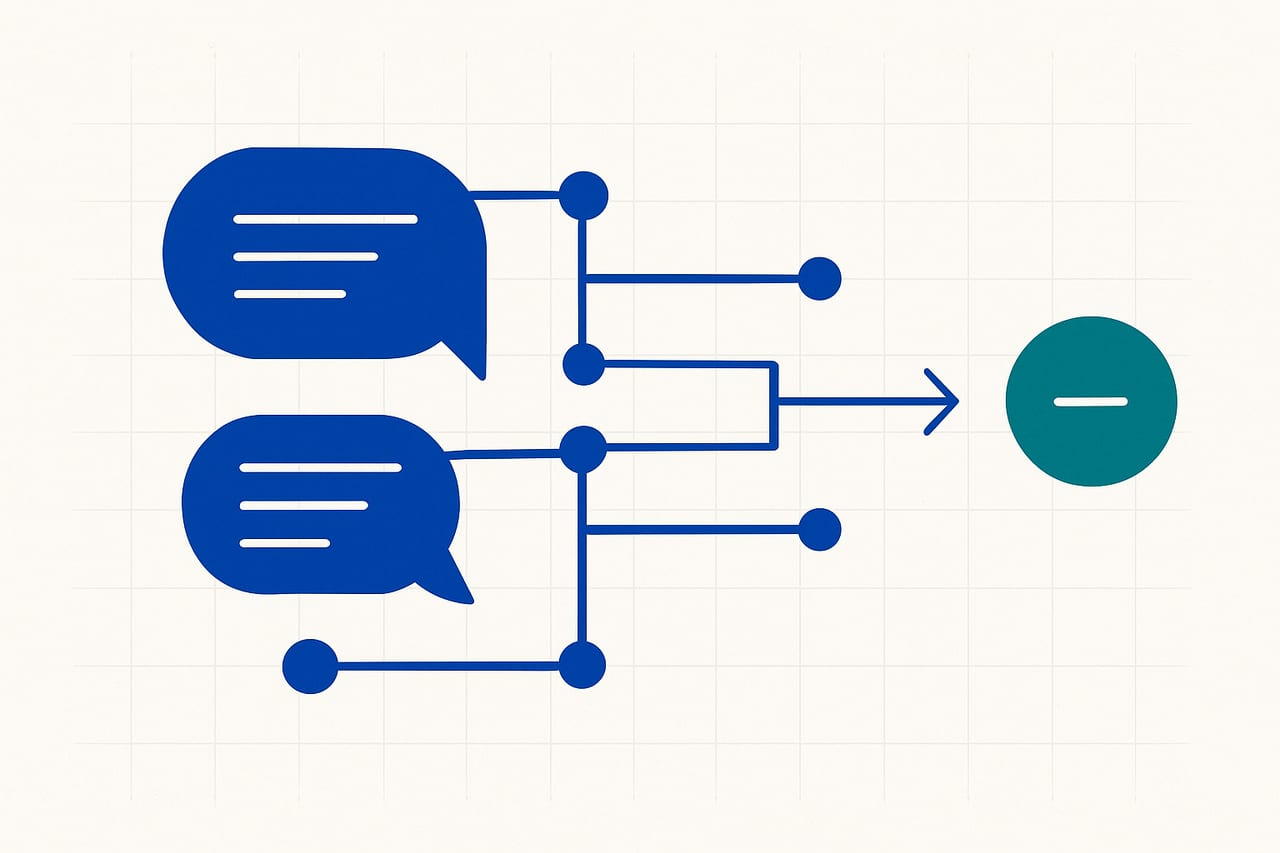
- Summarizing conversation history can reduce costs by up to 60%.
- Implementing an effective summarization algorithm is key to efficiency.
- Balancing detail and brevity in summaries is crucial for context.
- Optimized context windows lead to faster response times and lower latency.
The problem
Startups leveraging large language models (LLMs) often face significant costs associated with managing context windows during conversations. Each token processed incurs a cost, and as conversations grow, replaying entire histories can lead to runaway expenses. Founders and engineers encounter this issue particularly during customer support interactions or chatbots, where lengthy dialogues require constant context retention, drastically inflating operational costs.
What we found
Our research indicates that instead of replaying the entire conversation history, summarizing the dialogue can maintain context while drastically reducing token usage. By distilling key points and intents into a concise summary, we can effectively minimize the number of tokens processed, leading to major cost savings without sacrificing the quality of interaction. This non-obvious insight repositions how we approach conversation management in LLMs.
How to implement it
Start by selecting a summarization algorithm suitable for your use case. Techniques like extractive summarization (e.g., using TextRank) can identify and retain essential sentences from conversations, while abstractive methods (e.g., fine-tuning a transformer model) rephrase the content. Next, integrate this summarization step into your workflow: after each interaction, generate a summary that captures the main points. Ensure that the summary is stored and utilized as context for subsequent interactions, replacing the need for the entire conversation history. Monitor token usage before and after implementation to quantify cost savings.
How this makes life easier
By summarizing conversation history, startups can see a reduction in context window costs by up to 60%, allowing for more interactions within the same budget. This approach not only lowers expenses but also enhances response times, as shorter context windows lead to faster processing. Moreover, engineers can focus on refining the summarization algorithms, ensuring accuracy and relevance, which ultimately leads to improved user satisfaction and retention.
Trade-offs of Summarization Complexity
While summarization can reduce costs, it also introduces complexity in maintaining conversational nuance. A poorly executed summary might omit critical context, leading to misunderstandings. Startups should consider a hybrid approach where essential details are preserved while extraneous information is filtered out, balancing brevity with comprehensiveness. Regularly testing and iterating on the summarization strategy is essential to avoid pitfalls.
Figures are industry-typical ranges for these techniques, not guaranteed results — actual numbers depend on your workload.
The solution
To effectively cut context window costs, implement a summarization strategy that distills conversation history into concise, relevant summaries. This will not only save costs but also enhance the efficiency of your LLM applications.
FAQ
What types of summarization algorithms should I consider?
Consider starting with extractive methods like TextRank for initial implementations. For more advanced needs, explore fine-tuning transformer models for abstractive summarization.
How do I evaluate the effectiveness of the summarization?
Track token usage and response times before and after implementing summarization. Conduct user feedback sessions to assess if critical information is retained.
What if the summary loses important context?
Regularly analyze conversation logs to refine your summarization approach. A/B testing different summarization strategies can help identify the best balance between brevity and detail.
Can this strategy be applied to other types of LLM interactions?
Yes, this summarization approach can be beneficial in various LLM applications, including customer support, interactive chatbots, and even content generation tasks.
Want help to cut AI & LLM costs without cutting quality?
This is exactly what our AI & LLM cost engineering work covers. Book a build audit and we'll map it against your real architecture and cost curve.
Book a Build Audit