Understanding Scaling Thresholds: Preparing for 10x and 100x Growth
- Identify critical breakpoints in your architecture before scaling.
- Utilize chaos engineering to expose vulnerabilities at scale.
- Implement proactive monitoring to catch issues before they escalate.
- Design scalable APIs with built-in resilience to traffic spikes.
The problem
Startups often face unexpected failures as they scale, especially during rapid growth phases like 10x or 100x increases in user load. Founders and engineers frequently discover that their systems, which seemed robust at lower volumes, collapse under the weight of increased demand. This can lead to significant downtime, lost revenue, and damage to reputation, making it a critical issue to address early.
What we found
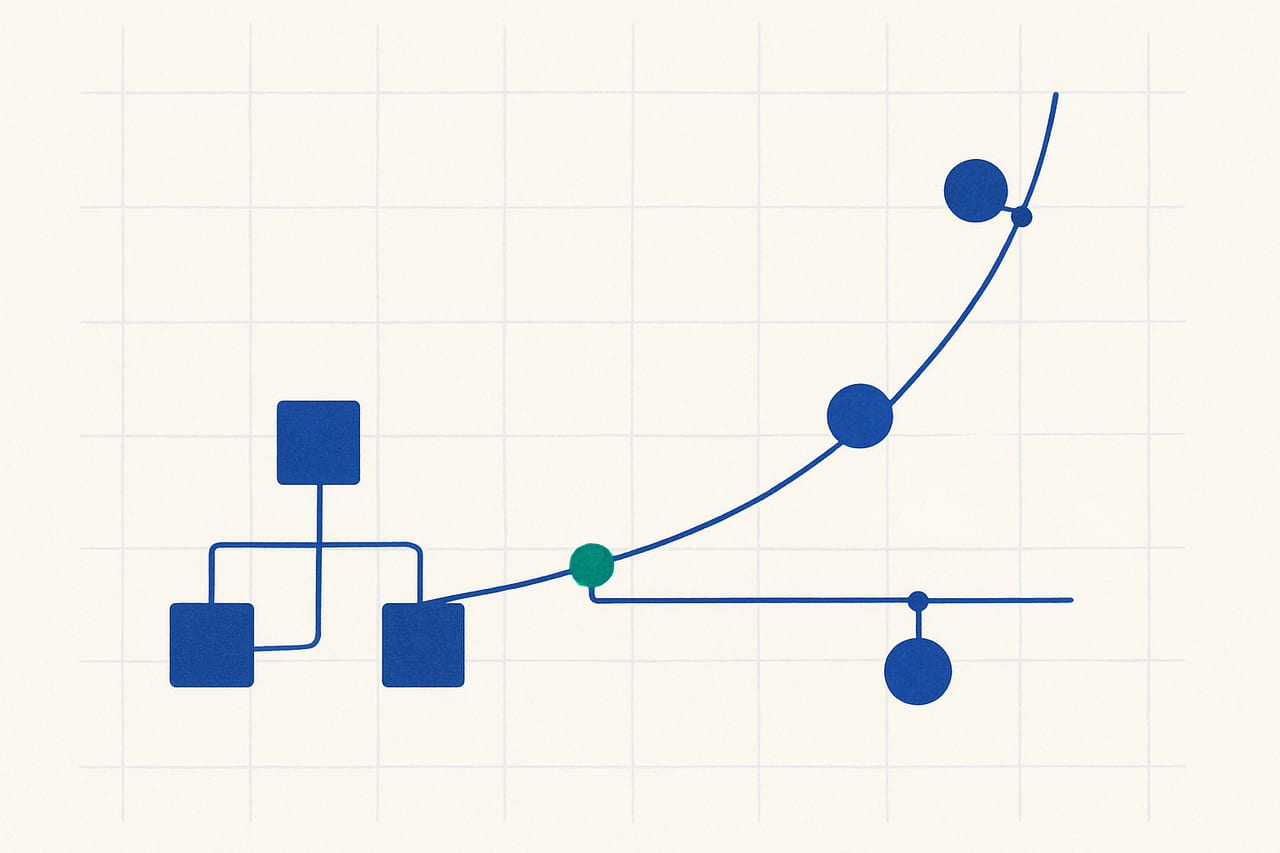
One non-obvious insight is that many scaling issues stem not from sheer traffic volume, but from the compounded effects of multiple interconnected system components failing simultaneously. For example, a sudden spike in API calls can lead to database connection pool exhaustion, which in turn can degrade the performance of downstream services. Modeling these interactions and their thresholds can provide a clearer picture of where your architecture is most vulnerable.
How to implement it
Begin by establishing clear metrics for your current system performance, such as response time, throughput, and error rates. Use tools like Prometheus or Grafana for real-time monitoring. Next, conduct load testing using tools like JMeter or k6 to simulate traffic spikes at 10x and 100x your current load. During these tests, apply chaos engineering principles by introducing failures (e.g., shutting down services) to observe how your system responds. Finally, document the thresholds at which performance degrades and create a scaling roadmap that includes architectural adjustments like implementing circuit breakers and auto-scaling policies.
How this makes life easier
By understanding and preparing for scaling thresholds, teams can significantly reduce the risk of outages and performance degradation during critical growth phases. This proactive approach leads to improved user satisfaction, as systems remain responsive even under heavy load. Additionally, by optimizing resource allocation and avoiding over-provisioning, startups can cut costs associated with unnecessary infrastructure, ultimately improving profitability.
Caveats in Scaling Strategies
It's essential to recognize that not all components will scale linearly. For instance, a monolithic database may become a bottleneck as you scale, necessitating a move to sharding or read replicas. Additionally, over-reliance on auto-scaling can lead to unpredictable costs if not carefully managed. Always be prepared for trade-offs, such as the balance between immediate responsiveness and long-term architectural integrity.
Figures are industry-typical ranges for these techniques, not guaranteed results — actual numbers depend on your workload.
The solution
To ensure your infrastructure can handle 10x and 100x growth, implement a robust monitoring and testing strategy that identifies and documents scaling thresholds. Use chaos engineering to expose vulnerabilities and prepare proactive scaling solutions to maintain system reliability and cost efficiency.
FAQ
How do I know when to scale my infrastructure?
Monitor key performance indicators (KPIs) like response time and error rates. Set thresholds that trigger scaling actions based on these metrics.
What tools should I use for load testing?
Consider using JMeter for comprehensive testing or k6 for developer-friendly scripting. Both can simulate high loads effectively.
What are the risks of auto-scaling?
While auto-scaling can manage load effectively, it may lead to unexpected costs if not configured with appropriate limits and policies to prevent over-provisioning.
How can chaos engineering help my scaling efforts?
Chaos engineering helps identify weaknesses in your system by intentionally introducing failures, allowing you to observe and remediate potential issues before they affect users.
Want help to map what breaks next before it does?
This is exactly what our scale roadmapping work covers. Book a build audit and we'll map it against your real architecture and cost curve.
Book a Build Audit