Read Replicas vs Sharding: Choosing Wisely for Postgres Scale
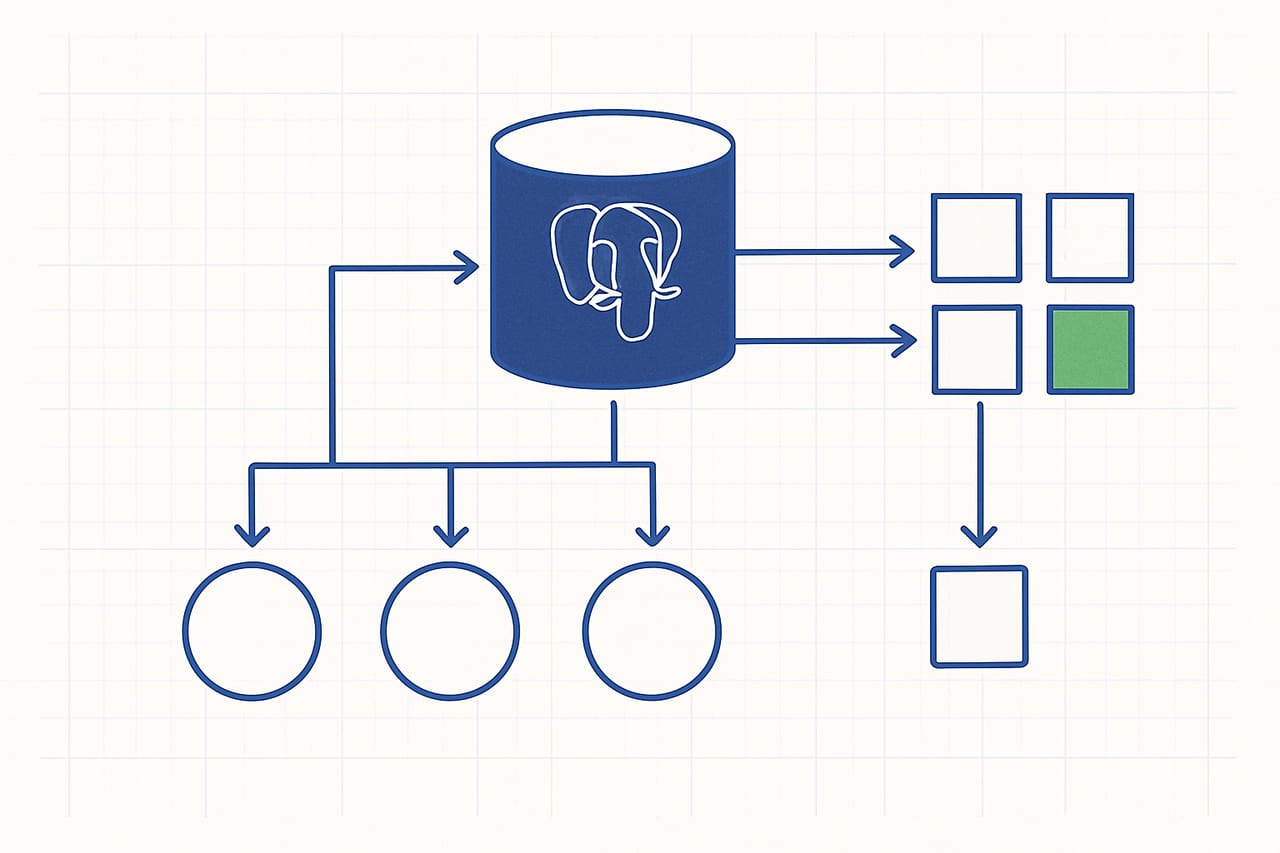
- Read replicas can offload read traffic but won't solve write bottlenecks.
- Sharding requires significant upfront design but scales writes effectively.
- Consider your workload: read-heavy apps may benefit more from replicas.
- Evaluate the complexity of sharding against immediate performance needs.
The problem
As startups scale, many founders encounter performance degradation in their Postgres databases. This issue typically arises during peak traffic periods when read and write operations spike, leading to increased latency and potential downtime. For teams focused on rapid growth, these slowdowns can hinder user experience and impede business objectives, making it crucial to find a timely solution.
What we found
While many assume adding read replicas is the first step when experiencing slowdowns, the reality is more nuanced. In high-write scenarios, read replicas can create a false sense of relief as they do not address the underlying write bottleneck. Instead, sharding, though complex, can effectively distribute both reads and writes across multiple database instances, offering a more sustainable long-term solution for scaling.
How to implement it
Begin by assessing your current database workload. Use tools like pg_stat_activity to identify whether your bottlenecks are read or write-related. If reads dominate, implement read replicas: configure a primary database and one or more replicas, adjusting your application to route read queries to the replicas. If your workload is write-heavy, design a sharding strategy: identify a sharding key based on your data access patterns, and partition your data across multiple databases. Use a consistent hashing method for even distribution, and ensure your application logic can route requests to the correct shard.
How this makes life easier
By implementing read replicas, you can immediately reduce the load on your primary database, resulting in lower latency for read operations—potentially improving performance by 50-70% for read-heavy workloads. In contrast, sharding allows for horizontal scaling of both reads and writes, which is essential for growing data volumes. This means your application can handle increased traffic without a linear increase in operational complexity, ultimately leading to a more robust and responsive system.
When not to sharding
Sharding introduces complexity that may not be justified for smaller datasets or applications with manageable traffic. If your application is predominantly read-heavy and can maintain performance with read replicas, sharding might be an over-engineered solution. Additionally, the operational overhead of managing multiple shards can lead to increased maintenance and potential inconsistencies if not handled properly.
Figures are industry-typical ranges for these techniques, not guaranteed results — actual numbers depend on your workload.
The solution
Prioritize implementing read replicas for immediate relief from read traffic bottlenecks, but plan for a sharding strategy as your data grows and write operations increase. This dual approach allows for both short-term gains and long-term scalability.
FAQ
How do I know if I need read replicas or sharding?
Analyze your workload: if read queries dominate, start with read replicas. If writes are causing slowdowns, consider sharding.
What are the costs associated with implementing sharding?
Sharding can increase infrastructure costs due to multiple database instances, but it may save costs long-term by optimizing performance and resource usage.
Can I transition from read replicas to sharding later?
Yes, you can start with read replicas and transition to sharding as your application scales, but ensure your application logic accommodates the change.
Are there tools to help with sharding in Postgres?
Tools like Citus or pg_shard can assist with sharding in Postgres, providing frameworks to simplify partitioning and data distribution.
Want help to make your product fast and stable under load?
This is exactly what our performance engineering work covers. Book a build audit and we'll map it against your real architecture and cost curve.
Book a Build Audit